Geopolitics in [2026]: How the World Order Has Changed
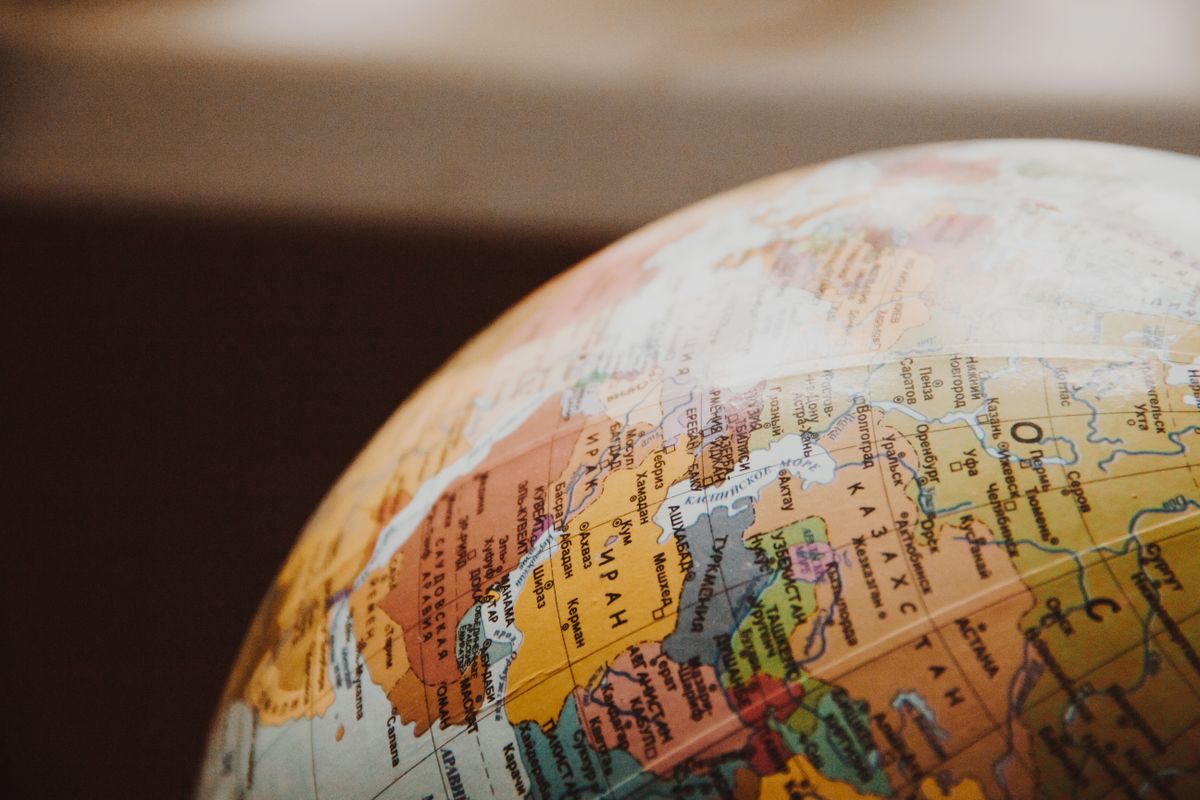
![Geopolitics in [2026]: How the World Order Has Changed](/img/posts/1529107386315-e1a2ed48a620.jpg)
The geopolitical landscape of 2026 looks basically different from 2019. Several assumptions that structured global affairs for 30 years — the unipolar US-led order, the stability of European integration, the reliability of global supply chains — have been tested, strained, or abandoned. This overview attempts to describe the new landscape without ideological framing.
The US-China Competition
US-China relations have stabilized into structured competition — not the cold war confrontation that alarmists predicted, nor the cooperative partnership that optimists hoped for. The two countries maintain extensive economic interdependence (bilateral trade remains $600 billion annually despite decoupling rhetoric) while competing intensely in technology, military positioning in the Indo-Pacific, and global influence in the Global South. The semiconductor restrictions imposed by the US from 2022 onward have seriously impacted China's AI development capabilities while accelerating Chinese domestic chip manufacturing efforts.
Europe's New Reality
Europe has been permanently changed by the Russian invasion of Ukraine. Defense spending has increased across the continent — Germany's reversal on military expenditure was the most dramatic policy shift since reunification. The EU has emerged more politically unified than skeptics expected, though internal tensions over migration, fiscal policy, and democratic backsliding in several member states persist. European energy independence from Russian gas has been largely achieved through LNG imports and accelerated renewables — at significant economic cost.
The Global South's Shifting Alignment
Perhaps the most significant geopolitical development of the 2020s is the refusal of most Global South nations to align clearly with either the US or China. India, Brazil, Indonesia, South Africa, and dozens of smaller nations are pursuing strategic autonomy — engaging with both major powers on terms that serve their national interests. BRICS expansion to include Saudi Arabia, UAE, Egypt, and Iran has created a larger but less ideologically coherent bloc. (Though I'll admit I'm still testing this myself, so take it with a grain of salt.)
The Multilateral System Under Stress
The international institutions built after 1945 — the UN Security Council, WHO, WTO — face legitimacy crises stemming from great power blocking and their failure to address new challenges actually. Plurilateral arrangements (agreements among smaller groups of like-minded nations) have partially filled the gap. Whether this is the end of the multilateral era or its adaptation to multipolar reality remains the central question in international relations.
Here's where I land on this: We're all figuring this out in real time. Context helps more than opinions.
Research from the Reuters Institute for the Study of Journalism at Oxford University finds that news sources explicitly acknowledging uncertainty and presenting multiple perspectives consistently rate higher for audience trust than those projecting false confidence — even when the latter's conclusions are ultimately correct.
What This Analysis Leaves Out
Global events and trends are impossible to understand fully from any single perspective or source. The analysis here reflects available information and honest interpretation, but omits perspectives, data, and local context that would add nuance — nuance that isn't fully knowable from outside a situation. Epistemic humility is appropriate when discussing complex global phenomena, and readers should treat any single source's framing, including this one, as a starting point rather than a conclusion.

Victoria Lane is an international affairs journalist with 13 years of experience covering geopolitics, global economics, and social issues across 30+ countries. She has reported from conflict zones, emerging markets, and...

![2026 FIFA World Cup [2026]: What to Watch, Who to Follow, and Honest Tournament Predictions](/img/posts/2026-world-cup-honest-preview-b1119f4c.jpg)
![International Relations [2026]: The Real Forces Shaping Global Politics Right Now](/img/posts/international-relations-honest-2026-64998bd2.jpg)