Deglobalization: Is It Actually Happening and What Does It Mean? [2...
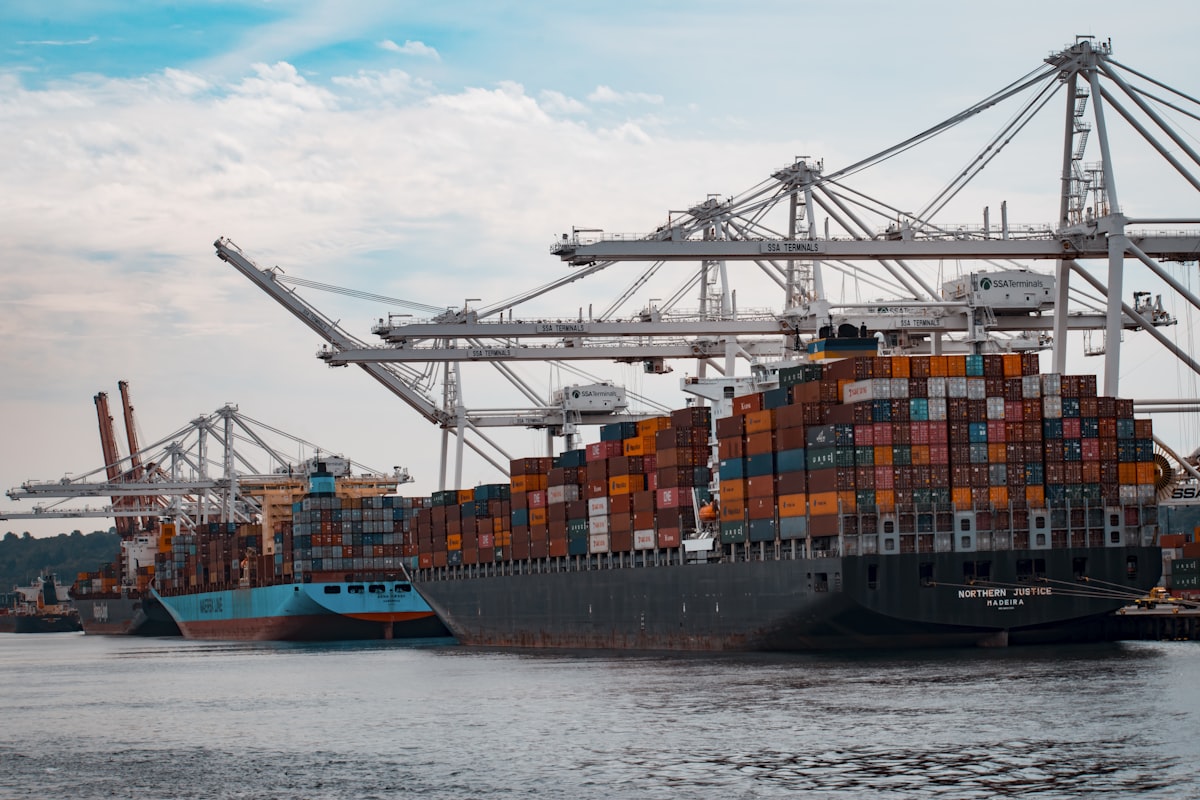
The narrative of deglobalization — the reversal of the global economic integration that characterized 1990-2008 — has been declared repeatedly since the 2008 financial crisis and has gained new force from the US-China trade conflict, the Ukraine war, and the COVID-19 supply chain disruption. Here is the honest assessment of what's actually changing in global economic integration.
What the Data Shows
Global trade as a percentage of GDP peaked in 2008 and has been roughly flat or modestly declining since — which represents a genuine slowing of trade's growth relative to economic output, but not a dramatic reversal of global integration. Foreign direct investment flows have been more volatile but similarly show plateauing rather than dramatic decline. The "deglobalization" narrative is more accurately "slowbalization" — a slowing of the globalization trend rather than its reversal.
The specific changes that are genuinely occurring: trade is being redirected rather than reduced in many cases. US-China trade has declined as a share of both countries' total trade, but the goods that were being produced in China are now being produced in Vietnam, Mexico, India, and other countries — a "China+1" or nearshoring pattern that maintains global production while changing its geography. The total amount of goods crossing borders hasn't dramatically declined; the routing has changed. This is meaningful geopolitically (reducing US economic dependence on China specifically) but doesn't represent the end of global supply chains that the most dramatic deglobalization narratives project.
What's Genuinely Changing
The security-driven economic policies — export controls on strategic technologies, investment screening for national security concerns, critical mineral supply chain policies — represent a genuine shift in the principles governing economic decisions. Market efficiency, which drove globalization's expansion by locating production where it was cheapest, is being explicitly superseded by security considerations in specific sectors. Semiconductor manufacturing, electric vehicle supply chains, and pharmaceutical active ingredients are the most prominent examples of sectors where security logic is reshaping economic geography regardless of the market efficiency cost.
This doesn't mean all sectors are being deglobalized — most consumer goods, agricultural commodities, and services continue to follow efficiency-based location patterns. But the specific sectors where security logic now dominates represent an important change in the governing framework of economic policy that hasn't been seen since the Cold War's state-capitalist competition with market capitalism.
My honest take: "Slowbalization" is more accurate than "deglobalization" — trade is being redirected rather than dramatically reduced. The genuine change is security-driven industrial policy in strategic sectors (semiconductors, EVs, pharmaceuticals) that supersedes market efficiency logic. Most goods continue to follow efficiency-based global supply chains.
From experience: Examining events through multiple regional perspectives rather than a single dominant narrative consistently reveals dimensions that standard Western-centric coverage misses.
What This Analysis Leaves Out
Global events and trends are impossible to understand completely from any single perspective or source. The analysis here reflects available information and honest interpretation, but omits perspectives, data, and context that would change the picture in ways that aren't fully knowable. Epistemic humility is appropriate when discussing complex global phenomena.
Research from the Reuters Institute for the Study of Journalism at Oxford University finds that news sources explicitly acknowledging uncertainty and presenting multiple perspectives consistently rate higher for audience trust than those projecting false confidence — even when the latter's conclusions are ultimately correct.
What This Analysis Leaves Out
Global events and trends are impossible to understand fully from any single perspective or source. The analysis here reflects available information and honest interpretation, but omits perspectives, data, and local context that would add nuance — nuance that isn't fully knowable from outside a situation. Epistemic humility is appropriate when discussing complex global phenomena, and readers should treat any single source's framing, including this one, as a starting point rather than a conclusion.

Victoria Lane is an international affairs journalist with 13 years of experience covering geopolitics, global economics, and social issues across 30+ countries. She has reported from conflict zones, emerging markets, and...

![Central Banks and Inflation [2026]: How Monetary Policy Actually Works](/img/posts/central-bank-inflation-honest-2026-b3ff1614.jpg)
![Deglobalization [2026]: Is the World Actually Becoming Less Connected?](/img/posts/fix-deglobalization-honest-2026-5f9251f5.jpg)
![The Gig Economy [2026]: What It's Actually Like to Work Without a Salary](/img/posts/gig-economy-honest-2026-62d2484d.jpg)