Functional Fitness [2026]: What It Actually Means Beyond the Marketing
![Functional Fitness [2026]: What It Actually Means Beyond the Marketing](/img/posts/functional-fitness-honest-guide-2026-499e72c4.jpg)
Functional fitness has become one of the most frequently used terms in the fitness industry, applied to everything from CrossFit to Pilates to bodyweight training programs. The term is used as a marketing descriptor that implies the training "functions" in real-world movement — as opposed to isolation exercises on machines that allegedly don't. The reality is both more nuanced and more interesting than the marketing suggests.
What Functional Fitness Actually Means (And Doesn't)
In exercise science, "functional" training refers to exercises that train movement patterns relevant to daily activities or sport-specific demands. The foundational movement patterns that most functional fitness frameworks address: hip hinge (bending at the hips to lift), squat (lowering and rising from a squatting position), push (pressing weight away from the body), pull (drawing weight toward the body), carry (transporting load while stabilizing), and rotate (producing or resisting rotational force). These patterns appear in real-world activity in ways that seated leg extension or bicep curl machines don't directly replicate.
The claim that machine-based isolation exercises are non-functional is an overstatement. Leg extension machines build quadriceps strength that transfers to walking, stair-climbing, and athletic performance. Bicep curls build elbow flexor strength that transfers to carrying groceries and pulling doors. The distinction between "functional" and "non-functional" exercise is a continuum rather than a binary, and the marketing category of "functional fitness" often overstates the real-world transfer deficit of traditional gym training.
What the Evidence Shows About Transfer
The research on exercise transfer — whether training one movement improves performance of a related movement — consistently shows that specificity matters more than the "functional" label. Squats improve squat performance more than leg press, and leg press improves leg press performance more than squats, but both produce meaningful transfer to activities requiring lower body strength. The magnitude of transfer depends on how similar the training movement is to the target activity, not on whether the exercise is labeled "functional."
The strongest evidence for functional training approaches comes from fall prevention research in older adults, where training balance and multi-joint coordination (as opposed to seated isolation exercises) produces greater reductions in fall risk. This is a genuine finding where the movement specificity of functional training produces measurable differences: practicing balance and coordinated multi-joint movement directly trains the neuromuscular control that prevents falls in ways that seated leg press doesn't.
CrossFit: The Most Prominent Functional Fitness Model
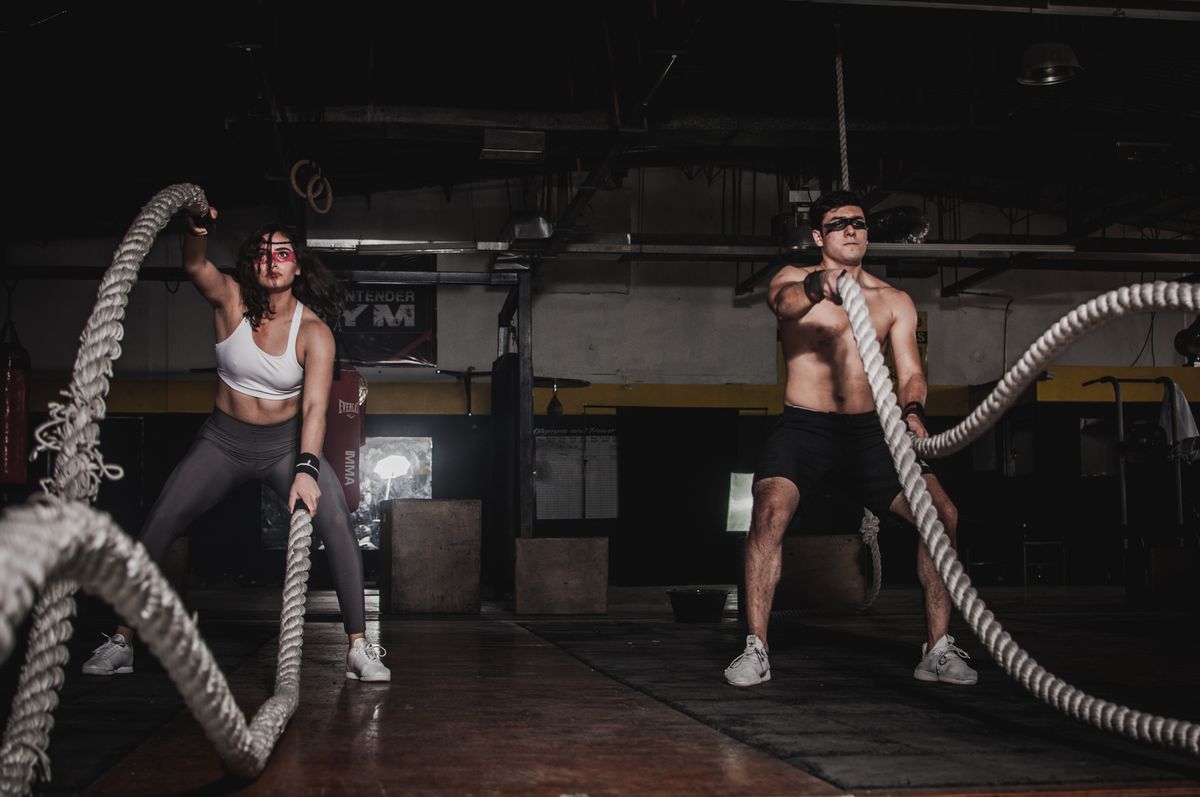
CrossFit's approach to functional fitness — constantly varied, high-intensity movements including Olympic lifts, gymnastics, and metabolic conditioning — has produced the most visible functional fitness community globally. The legitimate strengths of the CrossFit model: variety prevents adaptation plateaus; the community structure produces consistency that solo gym training often doesn't; the emphasis on multi-joint movements and power production trains athleticism broadly; and well-coached CrossFit facilities produce genuinely impressive fitness outcomes in members who train consistently.
The legitimate criticisms: injury rates in CrossFit are higher than in traditional gym training, particularly for the Olympic lifts and gymnastics movements that require significant skill before high-intensity loading is appropriate. The "constantly varied" principle, while preventing boredom, can conflict with the progressive overload principle that produces strength and muscle gains — random variation without planned progression is less effective for strength development than structured programming. Quality of coaching varies dramatically between CrossFit affiliates, and the barrier to affiliate ownership and coaching certification is lower than for many personal training credentials.
What to Look For in a Functional Fitness Program
The characteristics that distinguish effective functional fitness programming from marketing: a clear progression structure (loads, complexity, or volume increasing over time); coaching that emphasizes movement quality before intensity; inclusion of the fundamental movement patterns (hinge, squat, push, pull, carry, rotate) across the programming; and injury prevention attention including adequate mobility work and balanced pushing/pulling ratios.
The functional fitness programs with the best evidence for producing sustained results combine strength training (with progressive overload in the fundamental patterns) with conditioning work and movement quality training. This is less distinctive-sounding than "functional fitness" as a branded category but describes what actually works regardless of the label applied.
Honest Bottom Line: Functional fitness trains movement patterns (hinge, squat, push, pull, carry, rotate) relevant to daily activity and sport, which does produce better transfer to real-world movement than isolated machine exercises — but the distinction is a continuum, not binary. The strongest evidence for functional training advantages comes from fall prevention in older adults. CrossFit's legitimate strengths include community structure and athletic development; its legitimate concerns include higher injury rates and variable coaching quality. Effective functional fitness programs combine progressive overload in fundamental patterns with conditioning and movement quality work — regardless of how they're branded.

David Thompson is a sports journalist with 14 years of experience covering professional and amateur athletics across three continents. He has reported from four Olympic Games and numerous World Cup tournaments. David bri...
![HIIT Training [2026]: What High-Intensity Interval Training Actually Does and Doesn't Do](/img/posts/hiit-training-honest-guide-2026-9b729678.jpg)
![Zone 2 Training [2026]: What It Actually Is and Why Everyone Is Talking About It](/img/posts/zone-2-training-honest-guide-2026-d593f303.jpg)