What the James Webb Space Telescope Has Actually Discovered: The Honest Scientific Summary
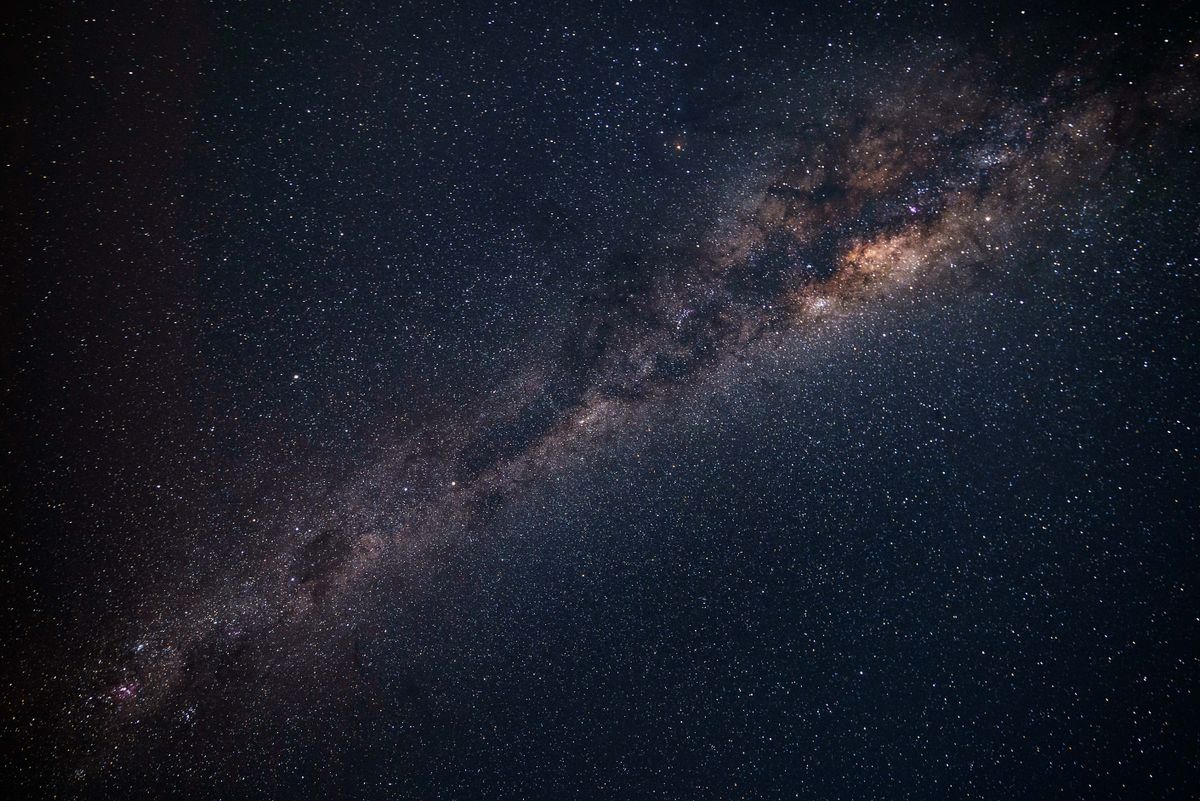
With a PhD in biochemistry and years of science writing experience, I have learned to be cautious about how scientific discoveries are communicated to general audiences — the gap between what a study actually shows and what headlines claim it shows is often significant. The James Webb Space Telescope has been one of the most exciting scientific instruments of the decade, and it has genuinely produced extraordinary science. Here is the honest summary of what it has actually found, and what it has not yet resolved despite sometimes breathless reporting.
What JWST Was Designed to Do
The James Webb Space Telescope launched in December 2021 and reached its operational position at the L2 Lagrange point (approximately 1.5 million kilometers from Earth) in early 2022. It was designed to observe the universe primarily in infrared wavelengths — longer wavelengths than visible light — which allows it to see through dust clouds that block visible light, and to detect light from the most distant and earliest galaxies whose light has been redshifted to infrared wavelengths by the expansion of the universe. Its primary scientific goals: studying the formation of the first stars and galaxies in the early universe, examining the formation and evolution of galaxies over cosmic time, studying the formation of stars and planetary systems, and characterizing the atmospheres of exoplanets (planets orbiting other stars). Its mirror — 6.5 meters in diameter compared to Hubble's 2.4 meters — and its infrared sensitivity make it orders of magnitude more capable than Hubble for these specific tasks.
The Genuine Discoveries
The early universe observations have been extraordinary and genuinely surprising to astronomers. JWST has detected galaxies from the first few hundred million years after the Big Bang that are significantly more massive and more developed than standard cosmological models predicted. This is a genuine scientific puzzle — not evidence that cosmology is wrong, but evidence that early galaxy formation was more efficient than models assumed. Working out why is active research. Exoplanet atmosphere characterization has been one of the most scientifically impactful JWST achievements. For the first time, JWST has detected specific molecules — carbon dioxide, water vapor, methane, and sulfur dioxide — in the atmospheres of planets orbiting other stars. The detection of carbon dioxide and sulfur dioxide on WASP-39b (a Jupiter-sized planet orbiting a distant star) was the first unambiguous detection of these molecules in an exoplanet atmosphere. These detections do not indicate life — WASP-39b is a hot gas giant extremely inhospitable to life — but they demonstrate the capability to characterize exoplanet atmospheres in detail.
What JWST Has Not Yet Found
Biosignatures in exoplanet atmospheres: JWST is theoretically capable of detecting some potential biosignatures — chemical signatures that could indicate biological processes — in the atmospheres of rocky planets in the habitable zones of nearby stars. This work is ongoing but has not yet produced detections. The timescales are longer than popular reporting suggests: atmospheric characterization of small rocky planets requires many observations over long periods. Evidence of life is not expected in the short term, and headlines suggesting JWST will soon tell us if life exists elsewhere significantly overstate the current capability. Disconfirmation of the Big Bang: some early reporting suggested JWST had found galaxies that challenged the Big Bang model. This was overstatement — the galaxies found were surprising for their mass and development at early epochs, but they do not challenge the fundamental cosmological model. They challenge specific details of our models of galaxy formation.
Honest Bottom Line: JWST has produced genuine scientific discoveries: early universe galaxies that are more massive than models predicted (a real scientific puzzle, not a model-busting finding), and the first detailed atmospheric characterizations of exoplanets including specific molecule detections. It has not found evidence of life or confirmed biosignatures. The early-galaxy findings challenge specific aspects of galaxy formation models, not fundamental cosmology. JWST represents a generational leap in observational capability — the science it will produce over its projected 20-year operational lifetime is expected to genuinely reshape multiple areas of astronomy.

Alex Nguyen holds a PhD in Biochemistry and has spent 8 years translating cutting-edge scientific research for general audiences. He covers biology, physics, climate science, and emerging research with the commitment to ...
![James Webb Space Telescope [2026]: What It Has Actually Discovered and What's Ahead](/img/posts/james-webb-telescope-honest-2026-9f0926e8.jpg)
![Misinformation [2026]: 7 Ways to Spot It Before You Share It](/img/posts/1446941611757-91d2c3bd3d45.jpg)
![Black Holes: What We Actually Know vs. What Gets Dramatized [2026]](/img/posts/1462331940025-496dfbfc7564.jpg)