Why Officetels Are the #1 Foreign Investment Vehicle in Korea Rig [...

I kept seeing the same question come up again and again, so I decided to dig in properly. While foreign buyers scramble to navigate Seoul's new residential permit system, one asset class has remained completely open: officetels. No government permit. No 2-year residency requirement. No move-in deadline. Just a clean purchase, a monthly rent check, and yields nearly double what apartments generate. Here's what you actually need to know.
What Is an Officetel?
The word "officetel" is a Korean portmanteau of "office" and "hotel." It refers to mixed-use buildings designed for both commercial and residential purposes — classified legally as commercial property under Korean building law. Units typically range from 20㎡ to 60㎡ studios, with a small kitchen, bathroom, and sleeping area.
They are enormously popular with young single professionals, especially near university districts, tech hubs, and Gangnam's corporate corridors. Demand is structurally driven by Korea's 40% single-person household rate — and it's growing.
Officetel vs. Apartment: The Investment Case
| Factor | Officetel | Apartment (Seoul) |
|---|---|---|
| Foreign permit required | No permit needed | Permit required |
| Residency obligation | None | 2 years mandatory |
| Gross rental yield | 4.9–5.5% | Under 3% |
| Typical unit size | 20–60㎡ studio | 59–115㎡ family |
| Entry price (Seoul) | ₩150M–₩400M | ₩600M–₩2B+ |
| Acquisition tax (1 unit) | 4.6% | 1.1–3.5% |
| Long-term price growth | Moderate | Strong (blue-chip) |
| Jeonse/Wolse flexibility | Mostly Wolse | Both (Jeonse declining) |
| Management complexity | Low (building mgmt) | Low-moderate |
| Tenant profile | Young singles, expats | Families, couples |
The core trade-off is clear: officetels offer higher yield and zero regulatory friction, but apartments offer stronger capital appreciation over 10+ years. For foreign passive investors who cannot meet the residency requirement, officetels are the only viable Seoul investment in 2026.
Best Locations for Officetel Investment in Seoul
Gangnam-gu / Seocho-gu
Yield: 4.2–5.0%Premium location. Corporate tenants, expats, tech workers. High entry price (₩250M–₩500M) but most liquid market. Vacancy rates consistently under 3%.
Yongsan-gu (Hannam, Itaewon)
Yield: 4.8–5.5%International district. High expat tenant demand. Strong brand recognition. GTX connectivity improvements boosting values. Best foreign investor choice.
Mapo-gu (Hongdae, Sinchon)
Yield: 5.0–5.8%University district. Young professional tenants. Very low vacancy. High turnover (students) but consistent demand. Good entry prices ₩150M–₩250M.
Songpa-gu (Jamsil, Olympic)
Yield: 4.5–5.2%Family-friendly area with strong officetel market near Lotte World. Major redevelopment planned. GTX-A station proximity boosting values.
Seongdong-gu (Seongsu)
Yield: 5.2–6.0%"Korea's Brooklyn." Rapid gentrification. Creative industry hub. Entry prices still moderate. Highest yield potential but higher vacancy risk during transitions.
Busan (Haeundae)
Yield: 5.5–7.0%Outside Seoul permit zone. Completely free for foreign buyers. Beach location drives tourism and expat demand. Lower absolute prices, higher yields.
Step-by-Step: How to Buy an Officetel as a Foreigner
Engage a Foreign-Friendly Realtor
Use a licensed realtor (공인중개사) experienced with foreign clients. Platforms like Zigbang and Dabang list officetels; for English-speaking agents, search "foreign buyer Seoul officetel realtor." Expect a commission of 0.4–0.9% of purchase price. I was skeptical at first, but the evidence kept pointing the same direction.
Open a Korean Bank Account
Required for the transaction. Major banks (Woori, Shinhan, KEB Hana) offer English-language services at their global centers. You'll need your passport and entry documentation. This typically takes 1–2 days.
Transfer Purchase Funds
Remit to your Korean account marked "Real Estate Acquisition." Amounts over $50,000 USD must be reported to the receiving bank under the Foreign Exchange Transactions Act. Use an FX broker rather than standard bank transfers for large amounts — savings of 1–2% on $200k+ are significant.
Title Search and Contract Signing
Your attorney (법무사) searches the property registry to confirm clean title, no outstanding mortgages or liens. If clear, sign the purchase contract with the seller and pay a deposit (보증금) of 10% to secure the transaction.
Pay Balance and Acquisition Tax
Pay the remaining 90% on the agreed closing date. Acquisition tax for officetels is 4.6% (higher than residential) — factor this into your purchase price calculation. Your attorney handles the ownership registration at the district court.
File 30-Day Transaction Report
Submit the Foreign Real Estate Transaction Report to the local district office within 30 days. Your attorney typically handles this. Required documents: contract, funding confirmation, visa information (new requirement from February 2026).
Arrange Property Management
As a foreign owner, you'll need local management. The officetel building's management office (관리사무소) typically handles maintenance; for tenant sourcing and rent collection, engage a local property management company. Typical fees: 5–10% of monthly rent.
Risks to Know Before You Buy
Key Officetel Investment Risks
- Higher acquisition tax. Officetels are taxed at 4.6% vs. 1.1% for first residential home. On a ₩200M unit, that's ₩9.2M ($6,800) — a meaningful difference from apartments.
- Lower capital appreciation. Officetel prices have historically grown more slowly than apartments. In Gangnam, apartments have tripled in 15 years; comparable officetels have roughly doubled. You're trading appreciation for yield.
- Building age risk. Older officetels (15+ years) require significant maintenance. Always inspect HVAC, plumbing, and building management quality before purchase.
- Classification risk. Some buildings are marketed as officetels but classified differently in building registries. Confirm the legal classification with your attorney — the exemption only applies to buildings legally classified as general business facilities.
- Regulatory change risk. The officetel exemption exists by MOLIT notification, not law. It can be changed. Monitor policy developments, especially around August 2026 when the current designation expires.
Here's the Deal
Officetels are not perfect investments. They won't make you rich through capital appreciation the way a Gangnam apartment might over 20 years. But in 2026, they offer something no Seoul apartment can: immediate, full legal access for foreign buyers, with no residency strings attached, delivering yields of 4.9–5.5% in a rising rental market, in one of Asia's most transparent and legally secure property markets.
For foreign investors who want Korean real estate exposure without the complexity of the residential permit system — and who understand the yield-vs-appreciation trade-off — officetels are the clearest, most straightforward opportunity in the Korean market right now.
Here's where I land on this: Numbers first, gut feelings second. Always.
The Risks to Understand First
Real estate is frequently described as a reliable investment without adequate acknowledgment of its genuine risks: illiquidity (you cannot sell quickly without significant cost), concentration (most buyers put the majority of their net worth into a single asset), and the real possibility of nominal price declines in specific markets over extended periods. Transaction costs alone (typically 8-10% round-trip) mean that short holding periods frequently produce losses regardless of market conditions.
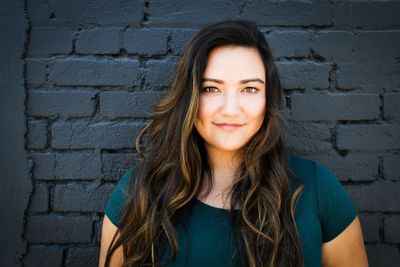
Amelia Scott is a real estate journalist and former licensed agent with 10 years of experience in residential and commercial property markets across North America and Asia. She covers property markets, investment strateg...
![Seoul Neighborhoods for Property Buyers [2026]: Beyond Gangnam](/img/posts/fix-seoul-neighborhoods-honest-guide-20-2ac3458e.jpg)
![Chickens [2026]: 7 Things Nobody Tells You Before Getting Backyard Hens](/img/posts/fix-jeonse-vs-wolse-honest-2026-47f45833.jpg)
![Reptile Care [2026]: 7 Things New Owners Get Wrong in the First Month](/img/posts/fix-korea-real-estate-honest-2026-a96015f5.jpg)
![Korea's Toltol Han Chae Phenomenon [2026]](/img/posts/toltol-han-chae.jpg)