5 Fingerpicking Patterns That Cover 90% of All Guitar Songs You'll Ever Want to Play
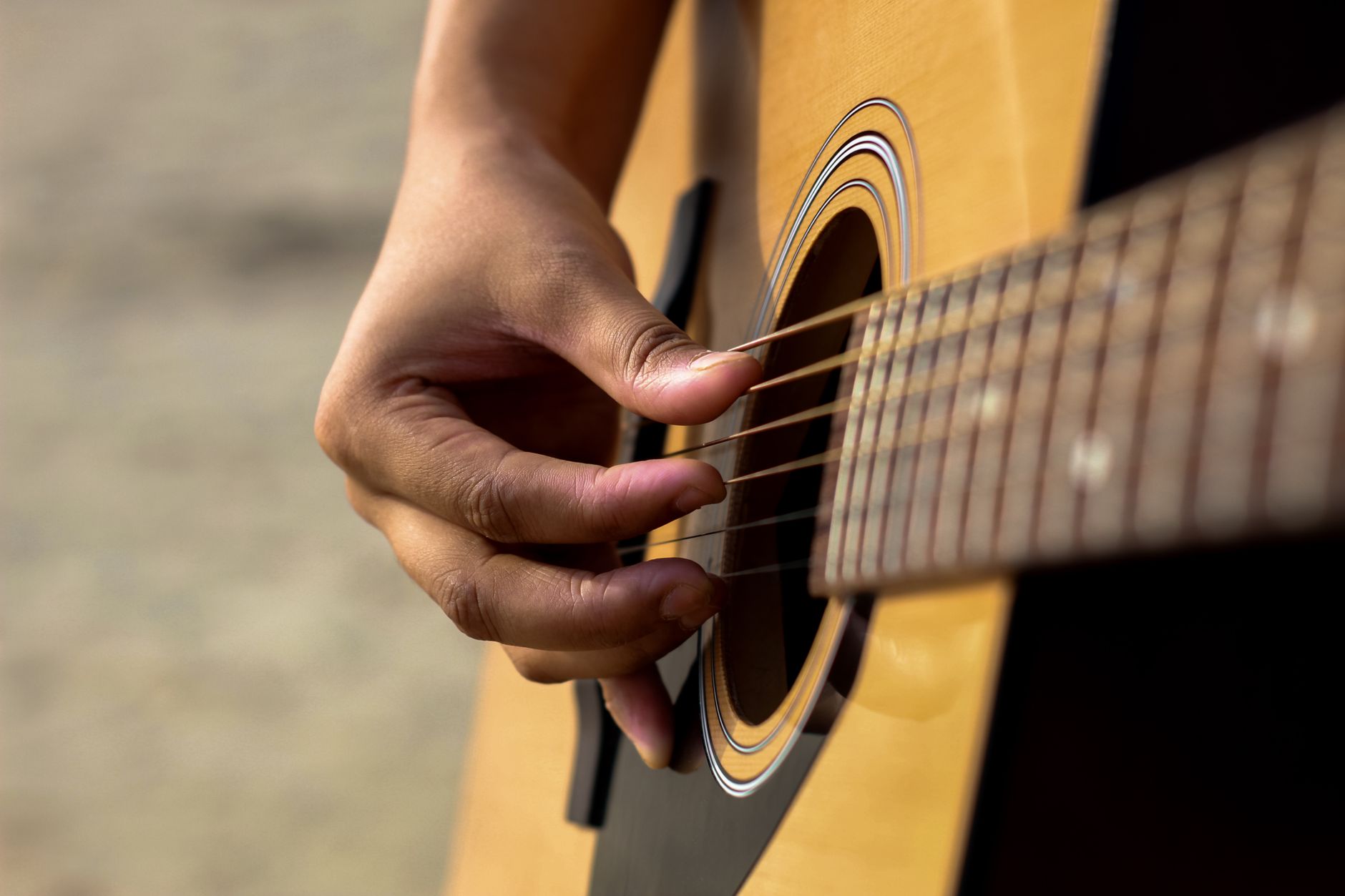
Fingerpicking — playing guitar by plucking individual strings with fingertips rather than strumming with a pick — produces a rich, complex sound that seems much more difficult than it actually is once you understand the underlying patterns. The overwhelming majority of fingerpicked guitar music uses a small number of repeating patterns applied to different chord shapes. Learn these 5 patterns and you can play most fingerpicked guitar songs you'll ever want to learn.
Pattern 1: The Basic Travis Pick
Travis picking (named for country guitarist Merle Travis) alternates a bass note on beats 1 and 3 with melody and harmony notes on beats 2 and 4. Thumb covers the bass strings (usually alternating between the root and 5th of the chord), while the index, middle, and ring fingers cover the treble strings. The independence of thumb and fingers is what makes it feel complex — the thumb maintains a steady bass pattern while the fingers play melody above it. Start slowly (60 BPM) with just the alternating bass before adding the treble notes. Travis picking is the foundation of country fingerpicking and appears in countless folk and rock songs.
Pattern 2: The Folk Pattern (p-i-m-a)
The most common folk fingerpicking pattern: thumb (p) plucks the bass string, then index (i), middle (m), and ring (a) fingers pluck the 3rd, 2nd, and 1st strings in sequence. Applied over chord shapes, this produces the quintessential folk guitar sound — "Blackbird" by the Beatles uses a variation of this pattern. The key is keeping the thumb and fingers moving at consistent tempo even when the pattern feels unfamiliar. Practice with a metronome at a tempo where you never make mistakes and increase speed only as that tempo becomes comfortable.
Patterns 3-5: Arpeggios, 6/8 Feel, and the Roll
The arpeggio pattern plays chord notes from lowest to highest in a consistent sequence (useful for ballads and classical-influenced material). The 6/8 feel (compound time with two groups of three eighth notes per bar) is the foundation of waltz-time fingerpicking — "House of the Rising Sun" and many classical pieces use this. The roll pattern (rapid repeating sequence through strings) is the foundation of bluegrass banjo rolls adapted to guitar — used in country and bluegrass fingerpicking for a driving, rhythmic feel. Each of these patterns requires a week or two of slow practice to become comfortable, then transfers to any chord shape.
Honest Bottom Line: Most fingerpicked guitar music uses a small number of repeating patterns applied to different chords. The 5 essential patterns: Travis pick (alternating bass with treble melody), folk pattern (p-i-m-a sequence), arpeggio (lowest to highest), 6/8 feel (waltz time), and roll (rapid repeating sequence). Learn each pattern at very slow tempo before increasing speed — muscle memory requires accuracy before speed. Once a pattern is comfortable at slow tempo, it transfers to any chord shape with minimal additional practice.