Smart Home Interior Design [2026]: Integrating IoT Without Sacrificing Aesthetics
![Smart Home Interior Design [2026]: Integrating IoT Without Sacrificing Aesthetics](/img/posts/smart-home-interior-iot-2026-52c410ab.jpg)
Smart home technology and interior design have historically been in tension — smart speakers, visible cables, router boxes, and sensor clusters are functional but rarely beautiful. The integration of IoT (Internet of Things) technology into home environments has matured to the point where thoughtful design can incorporate smart functionality without compromising aesthetic intent. Here is the honest guide to what smart home integration actually requires from a design perspective.
The Technology-Invisible Principle
The most sophisticated smart home design makes technology invisible or incidental rather than prominent. Switches embedded in walls at standard height rather than visible smart plugs; speakers integrated into bookshelves or disguised as decorative objects rather than prominent cylinders in room centers; sensors mounted in architectural features (door frames, ceiling corners) rather than attached to surfaces; cable management that eliminates visible runs entirely. The aesthetic goal is a home that feels designed rather than gadgeted — the technology serves the space rather than dominating it.
Lutron's Caseta system (hardwired smart switches that replace standard switches entirely) exemplifies this principle — the interface is a standard-looking wall switch, the intelligence is invisible. Philips Hue bulbs in existing fixtures require no visible technology beyond the bulb itself. The smart home products that integrate most successfully aesthetically are those that replace existing elements rather than adding new visible ones.
Lighting Design as the Highest-Impact Integration
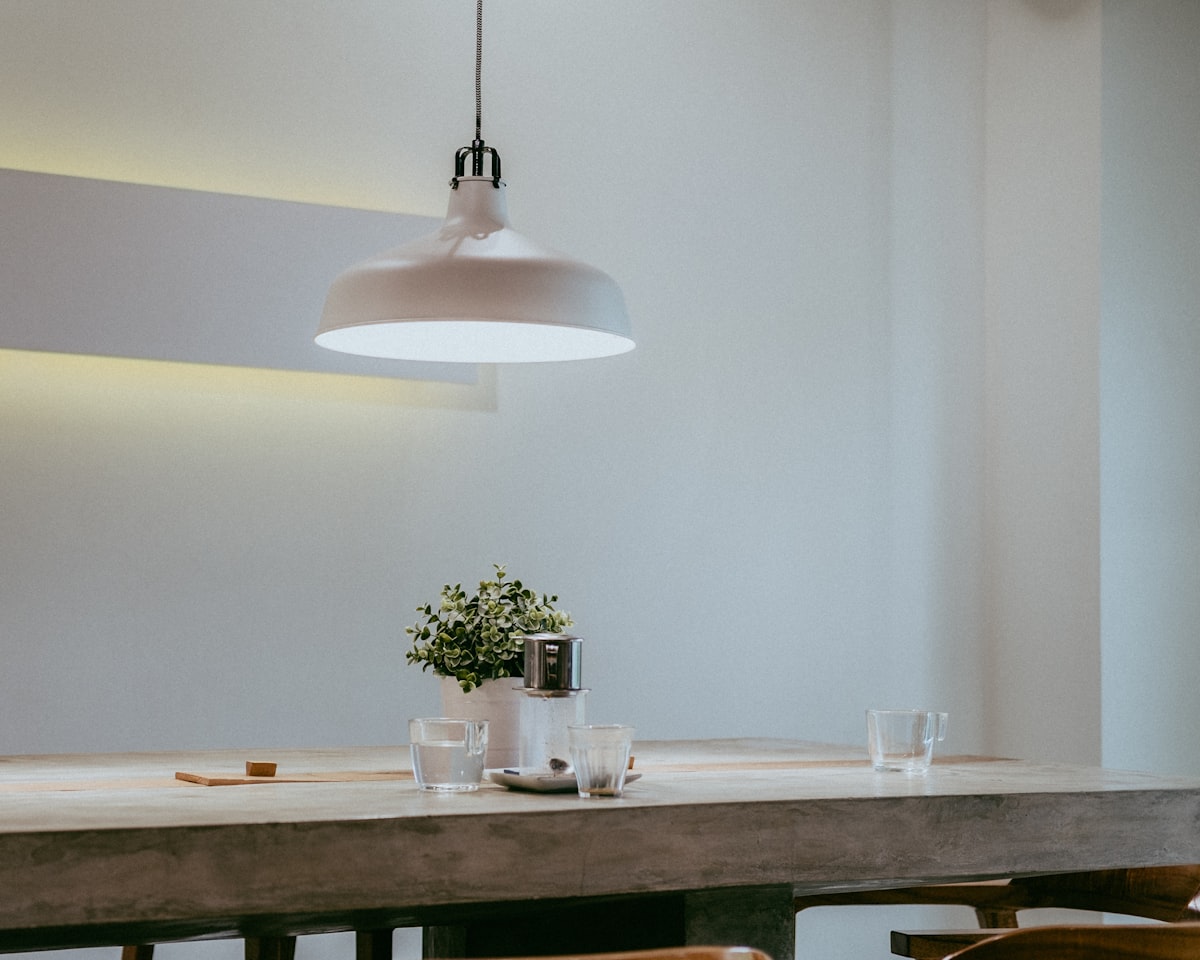
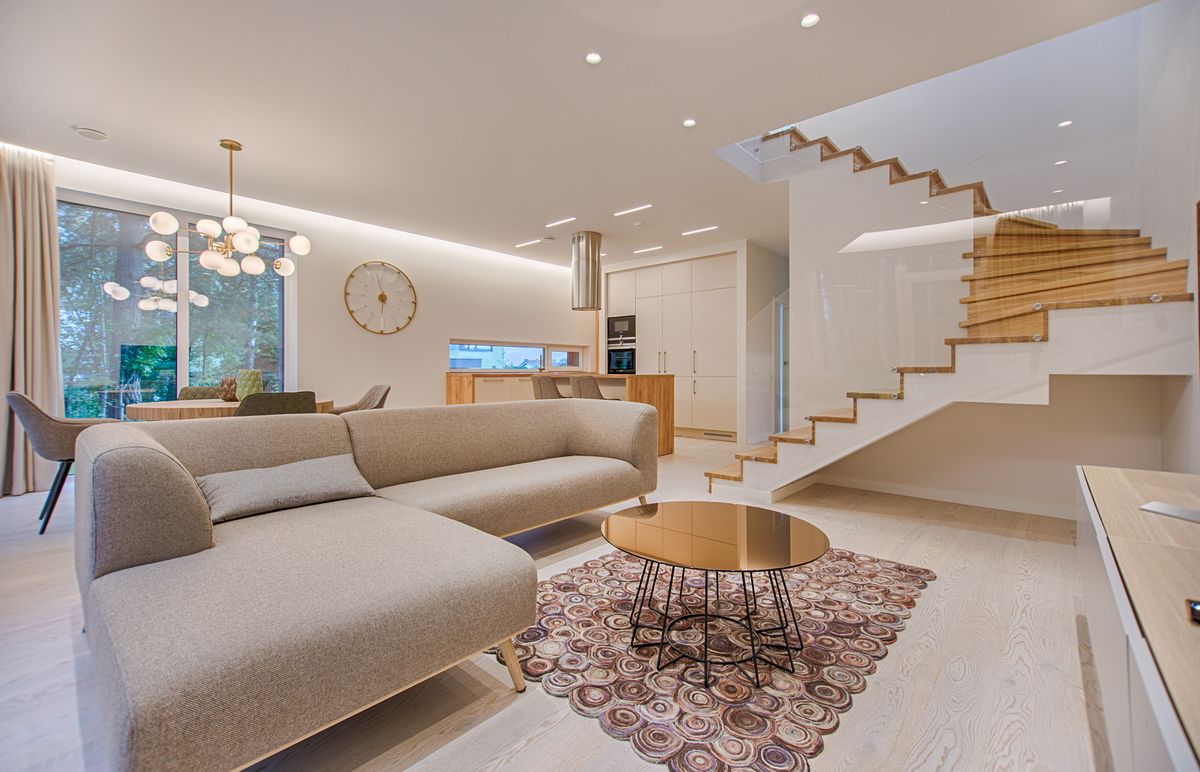
Smart lighting offers the most significant aesthetic return on IoT investment because lighting fundamentally affects how every other design element looks and feels. The interior design principle that transforms most spaces — replacing single overhead fixtures with multiple layered light sources at different heights — is significantly more achievable with smart lighting because individual bulbs and fixtures can be controlled independently without complex wiring. A living room with floor lamps, table lamps, and ambient lighting all controllable by scene (bright for work, warm and dim for evening, cool-white for reading) achieves both functional optimization and aesthetic sophistication that single-switch overhead lighting can't approach.
The Practical Integration Challenges
The honest challenges of smart home interior design: Wi-Fi dead zones and signal strength affect every wireless smart device — the smart lighting or smart speaker that works beautifully near the router fails in a back bedroom. A mesh Wi-Fi system (Eero, Google Nest Wifi) is the infrastructure prerequisite for whole-home smart device reliability. Battery-operated smart sensors (motion sensors, door sensors) avoid wiring but require battery management; hardwired devices avoid battery changes but require installation planning. The Matter standard (2022+) improves interoperability between platforms, but specific device compatibility with your chosen platform (Google Home, Apple HomeKit, Amazon Alexa) should be verified before purchase.
Honest Bottom Line: The highest-aesthetic smart home design makes technology invisible — replacing existing elements (switches, bulbs, fixtures) rather than adding visible new ones. Smart lighting is the highest-impact integration because it transforms how every other design element looks; scene-based control (bright/work/evening/reading) achieves what single-switch overhead lighting cannot. Mesh Wi-Fi (Eero, Google Nest Wifi) is the infrastructure prerequisite for reliable whole-home smart devices. Verify specific device compatibility with your chosen platform (HomeKit, Google Home, Alexa) before purchase — Matter standard improves but hasn't eliminated interoperability issues.

Isabel Torres is an interior designer, home organization consultant, and lifestyle writer who has helped hundreds of clients transform their living spaces. She covers home design, organization, smart home technology, and...
![Interior Design [2026]: The Rules That Actually Work and the Trends Worth Ignoring](/img/posts/fix-interior-design-honest-guide-2026-e1b59c63.jpg)