Home Lighting Design in 2026: Why Your Apartment Feels Wrong and How to Fix It
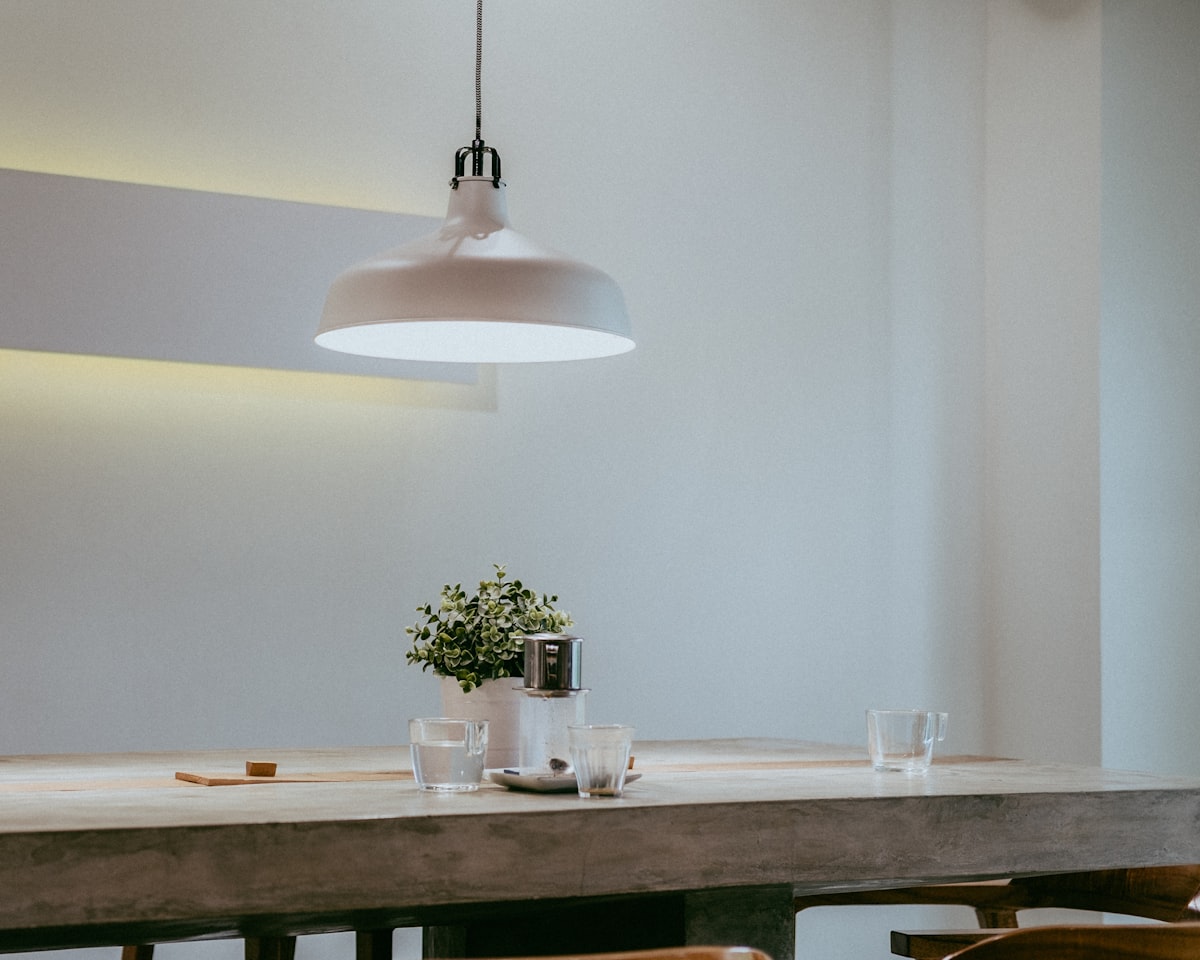
The single change that most dramatically improves how an apartment or house feels is not furniture, paint color, or artwork. It's lighting. Most people live under overhead lighting that was installed by contractors optimizing for brightness coverage at minimum cost, and that lighting makes every room feel like an office. Here is the design approach that professional designers use and that's accessible at any budget.
Why Overhead Lighting Is the Problem
A single overhead light source illuminates a room from above at a high angle. This creates harsh shadows beneath features (noses, brow ridges, furniture), flattens the visual texture of materials, and creates a uniform brightness that eliminates the contrast variation that makes spaces feel interesting and cozy.
Human environments have used low, distributed light sources for most of human history — candles, fires, oil lamps. The human visual system evolved in these conditions. Overhead fluorescent-style lighting is evolutionarily novel and psychologically uncomfortable in a way that's largely unconscious but pervasive.
The Layered Lighting Approach
Interior designers describe lighting in three layers that should typically coexist in any room:
Ambient light — general illumination for the space. In most rooms this is the overhead fixture. The goal is enough light to move through the space safely, not to illuminate it for detailed work.
Task light — specific illumination for activities: reading lamps, under-cabinet kitchen lighting, desk lamps, bathroom vanity lighting positioned at face level rather than above. Task light is brighter than ambient and directed at specific surfaces.
Accent light — lighting that draws attention to specific features or creates atmosphere: uplighting behind furniture, picture lights over artwork, LED strip lighting under furniture or shelving. Accent light is usually the dimmest layer individually but contributes significantly to how a space feels.
The typical apartment with only overhead lighting has ambient light but no task or accent lighting. Adding the other two layers dramatically changes the subjective quality of the space.
The Practical Transformation
Start by turning off your overhead light and replacing it entirely with floor lamps and table lamps positioned at seated eye level. The difference is immediately perceptible — the room feels warmer, more comfortable, and more like a living space than a workspace.
The lamp placement that works: lamps positioned to light the perimeter of a room (against walls, in corners) rather than the center create a sense of depth that overhead lighting eliminates. Two or three floor lamps around a living room, each with 400-800 lumens, provide adequate ambient light while creating a fundamentally different visual environment than a single overhead source.
Bulb color temperature matters significantly. The standard color temperature scale runs from 2700K (warm, yellowish — the incandescent standard) to 6500K (cool, bluish — daylight simulation). Living spaces and bedrooms benefit from 2700-3000K bulbs; task areas (kitchen counters, home offices, bathrooms) can use 3000-4000K for better visual acuity. Many apartments come with 4000-5000K cool white bulbs that contribute to the office-like feel — simply replacing them with 2700K equivalents produces a significant change.
Dimmers: The Highest-ROI Upgrade
Dimmable overhead fixtures controlled by smart dimmers (Lutron Caseta, Leviton, or smart bulbs with phone control) allow the overhead light to function at lower levels in the evening while providing full brightness when needed. At 20-30% brightness, overhead lights behave much more like ambient accent lighting than overhead illumination.
For renters who can't modify switches: smart bulbs (Philips Hue, Govee, or budget alternatives) with app or voice control provide dimming capability without any wiring changes. The bulb replaces the standard bulb in any existing fixture and connects to your phone.
Budget Implementation
Two IKEA RANARP floor lamps ($40 each), three warm-white LED bulbs ($12), and a smart plug for remote control ($15) — roughly $110 — can transform a living room more effectively than $500 in furniture changes. The investment is small; the impact is disproportionate.
Honest Bottom Line: Overhead-only lighting is the most common reason spaces feel uncomfortable despite everything else being right. Layered lighting (ambient plus task plus accent) fundamentally changes the experience of a space. The immediate transformation: turn off your overhead light and replace it with floor and table lamps at seated eye level. Warm white bulbs (2700-3000K) versus cool white bulbs is a significant, immediate, cheap change. Dimmers — smart bulbs or smart switches — provide the flexibility to use overhead lights at lower levels that transform their feel.

Isabel Torres is an interior designer, home organization consultant, and lifestyle writer who has helped hundreds of clients transform their living spaces. She covers home design, organization, smart home technology, and...
![Smart Home Interior Design [2026]: Integrating IoT Without Sacrificing Aesthetics](/img/posts/smart-home-interior-iot-2026-52c410ab.jpg)
![Interior Design [2026]: The Rules That Actually Work and the Trends Worth Ignoring](/img/posts/fix-interior-design-honest-guide-2026-e1b59c63.jpg)