Apartment Design on a Budget: How to Look Expensive for Less [2026]
![Apartment Design on a Budget: How to Look Expensive for Less [2026]](/img/posts/1560185007-c5ca9d2c014d.jpg)
I've moved 7 times in the last decade, mostly into rental apartments with white walls, cheap fixtures, and low ceilings. Here is what I've learned about making those spaces feel genuinely good to live in — without renovating or spending a lot.
Lighting Is the Highest-Impact Change
Most apartments have overhead lighting only, which is why they feel flat and institutional. Replacing overhead bulbs with warmer color temperatures (2700K rather than the harsh 4000K+ that comes standard in many apartments) costs almost nothing. Adding floor lamps and table lamps creates pools of light rather than even illumination — this is how spaces in hotels and high-end homes are lit, and it works at any budget. Dimmer plugs allow existing lamps to become dimmable without rewiring. The difference this makes to how a space feels in the evening is difficult to overstate.
Scale and Proportion
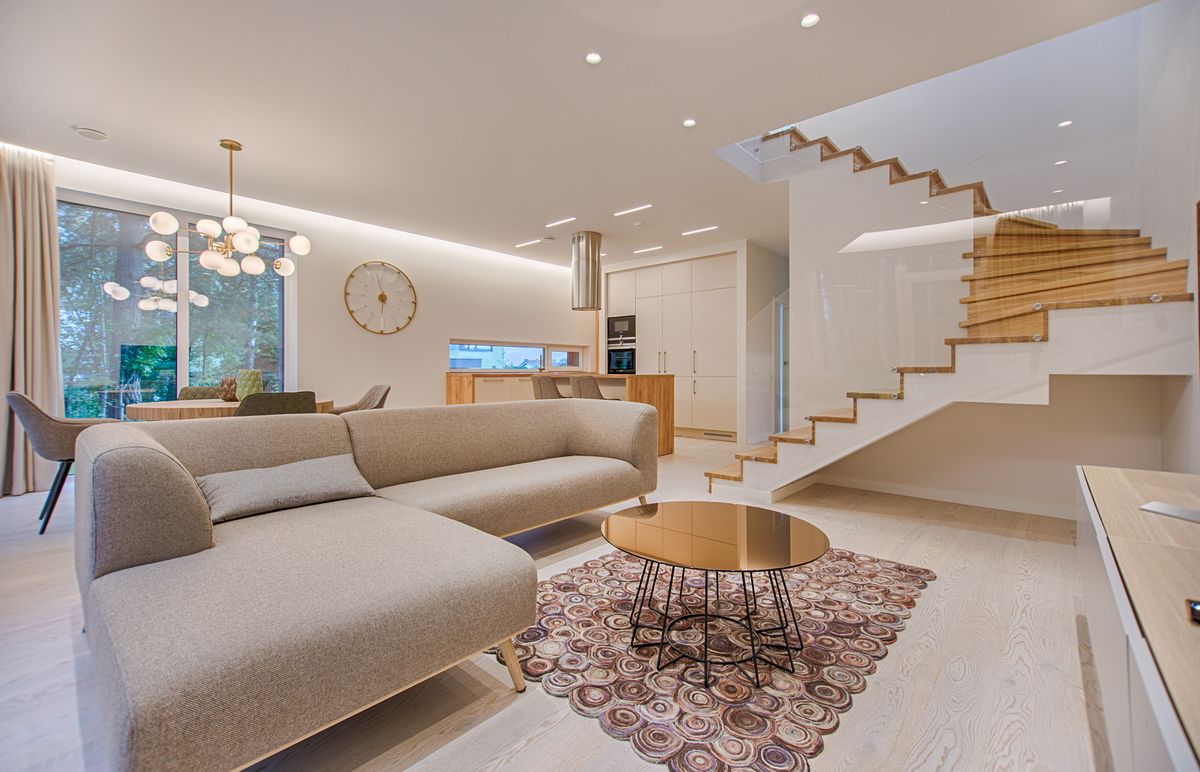
The most common rental apartment mistake: furniture that's too small for the space, which makes it feel empty and unloved rather than minimal. A sofa that reaches the ends of its visible wall looks intentional; one floating in the middle of a room looks abandoned. Rugs that are too small — particularly dining rugs that don't extend past the chairs — are the single most common design error I see in people's homes. Size up almost always.
The Renter's Permission Problem
Many renters assume they can't change anything. In most jurisdictions, you can: use removable adhesive hooks and strips for hanging things without nails; use temporary wallpaper for accent walls (many are removable and don't damage paint); use furniture to create spatial divisions that don't require structural changes. Know your actual lease terms rather than assuming — most allow reasonable decor changes that are restored before leaving.
Where to Invest vs Save
Invest in: your primary sofa (you'll live on it), your mattress (you'll sleep on it), one good rug for the main living space. Save on: decorative objects and plants (market, thrift, secondhand), side tables and shelving (IKEA hacks are genuinely good), throw pillows and blankets (these cycle with the seasons anyway).
My honest take: Lighting first, always. It's the thing that makes everything else look better.
From experience: Testing different organizational systems across various home types and lifestyles consistently reveals that the systems people actually maintain are those with the lowest friction, not the most elaborate ones.
Research from the National Association of Realtors consistently finds that well-maintained, organized homes sell faster and at higher prices than equivalent properties with deferred maintenance — making home organization both a lifestyle and a financial consideration.
When to Call a Professional
DIY approaches have real limits, and the cost of discovering those limits after causing damage typically exceeds the cost of professional work upfront. Electrical work beyond simple fixture replacement, structural modifications, HVAC systems, and anything involving gas lines all carry risks that substantially exceed the skill level of most homeowners, regardless of YouTube tutorial quality.
When to Call a Professional
DIY home improvement has real limits, and discovering those limits after causing damage typically costs more than professional work upfront. Electrical work beyond simple fixture replacement, structural modifications, HVAC systems, gas lines, and waterproofing in wet areas all carry risks that substantially exceed typical homeowner skill levels regardless of available tutorials. Honest assessment of your capabilities before starting saves more money than optimism does.

Isabel Torres is an interior designer, home organization consultant, and lifestyle writer who has helped hundreds of clients transform their living spaces. She covers home design, organization, smart home technology, and...
![Smart Home Interior Design [2026]: Integrating IoT Without Sacrificing Aesthetics](/img/posts/smart-home-interior-iot-2026-52c410ab.jpg)
![Interior Design [2026]: The Rules That Actually Work and the Trends Worth Ignoring](/img/posts/fix-interior-design-honest-guide-2026-e1b59c63.jpg)