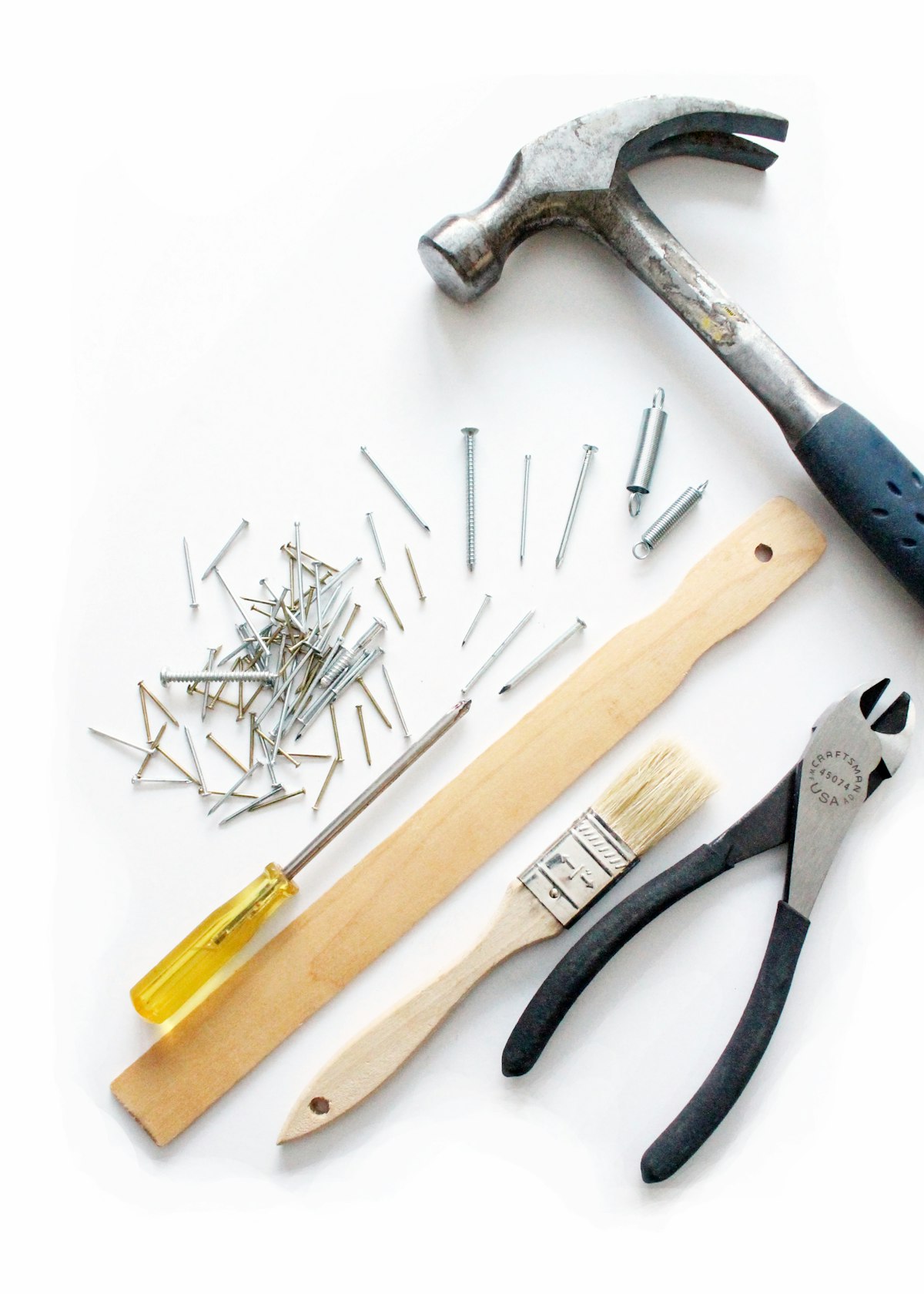
9 DIY Home Repairs Every Homeowner Should Know [2026]
![9 DIY Home Repairs Every Homeowner Should Know [2026]](/img/posts/1581578731548-c64695cc6952.jpg)
The average homeowner pays $1,000-3,000 annually for repairs that could be done for $50-200 in materials. Learning basic DIY skills is one of the highest-return investments of time a homeowner can make — and most repairs are far less intimidating than they appear.
Unclogging Drains
Most slow drains are caused by hair and soap buildup in the P-trap (the curved pipe under the sink). Remove and clean it before buying chemical drain cleaners. For stubborn clogs, a drain snake (25-foot model, $30) clears 95% of residential clogs. Chemical drain cleaners work but damage pipes with repeated use and rarely clear solid blockages.
Patching Drywall
Small holes (under 6 inches): apply spackling compound, let dry, sand smooth, paint. Larger holes: cut a clean square around the damage, install backing boards, cut a patch from new drywall, tape, mud, feather the edges, sand, and paint. YouTube tutorials make this process very approachable — the result of a properly patched wall is invisible. That said, I'm not sure this works the same way for everyone.
Fixing a Running Toilet
A running toilet wastes 200 gallons per day and costs $70-100/month. The cause is almost always a failed flapper — the rubber seal at the bottom of the tank. Replacement flappers cost $5-10 and install in 5 minutes without tools. If the flapper isn't the issue, the fill valve ($15-20) can be replaced in 15 minutes with minimal skill.
Caulking
Failed caulk around tubs, showers, and windows allows water intrusion that causes thousands in structural damage over time. Remove old caulk with a utility knife, clean the surface thoroughly, apply new caulk in a continuous bead, smooth with a wet finger. Use silicone caulk for wet areas. Total time: 30 minutes. This single repair can prevent major water damage.
My honest take: Worth your time. Go use it.
Electrical Work: What's Safe to DIY
Electrical work has the clearest line between safe DIY and professional-required work. Replacing outlets and light switches — with the circuit breaker off and voltage verified with a non-contact tester — is accessible to careful beginners. Replacing light fixtures and installing ceiling fans follow the same principle. What requires a licensed electrician: new circuit installation, panel upgrades and modifications, and any work involving the main service entry. The consequence of electrical errors — fire, electrocution — makes this the category where the line matters most.
Flooring: The High-Impact DIY Project
Flooring replacement produces some of the highest visible impact per dollar of any home improvement project. Luxury vinyl plank (LVP) flooring clicks together without adhesive, can float over existing floors, and is forgiving of minor subfloor imperfections. Laminate flooring follows similar installation principles. Both require a moisture barrier in below-grade and concrete slab installations, correct expansion gap around the perimeter, and careful measurement to minimize waste. These projects are achievable over a weekend for motivated beginners in a single room and produce dramatic visible results for relatively modest material costs.
From experience: Testing different organizational and improvement approaches across various home types and lifestyles consistently reveals that sustainable systems are those with the lowest friction, not the most sophisticated design.
According to National Association of Realtors data, well-maintained homes sell faster and at higher prices than comparable properties with deferred maintenance — with buyers consistently willing to pay a premium for properties that signal ongoing care rather than periodic renovation.
When to Call a Professional
DIY home improvement has real limits, and discovering those limits after causing damage typically costs more than professional work upfront. Electrical work beyond simple fixture replacement, structural modifications, HVAC systems, gas lines, and waterproofing in wet areas all carry risks that substantially exceed typical homeowner skill levels regardless of available tutorials. Honest assessment of your capabilities before starting saves more money than optimism does.
Honest Bottom Line: Electrical DIY safe zone: replacing outlets, switches, and light fixtures with circuit breaker off and voltage verified. Hard stops for licensed electricians: new circuits, panel work, and main service entry. Flooring replacement produces high visible impact at accessible skill levels — luxury vinyl plank (LVP) click-together installation is the most forgiving beginner flooring project, requiring no adhesive and tolerating minor subfloor imperfections. Always maintain correct expansion gaps around the perimeter.

Isabel Torres is an interior designer, home organization consultant, and lifestyle writer who has helped hundreds of clients transform their living spaces. She covers home design, organization, smart home technology, and...

![DIY Home Repairs [2026]: What You Can Actually Do and What to Leave to Professionals](/img/posts/diy-home-repairs-honest-2026-5652f098.jpg)