Why Rome Actually Fell: Moving Past the Myths to What the Evidence Shows
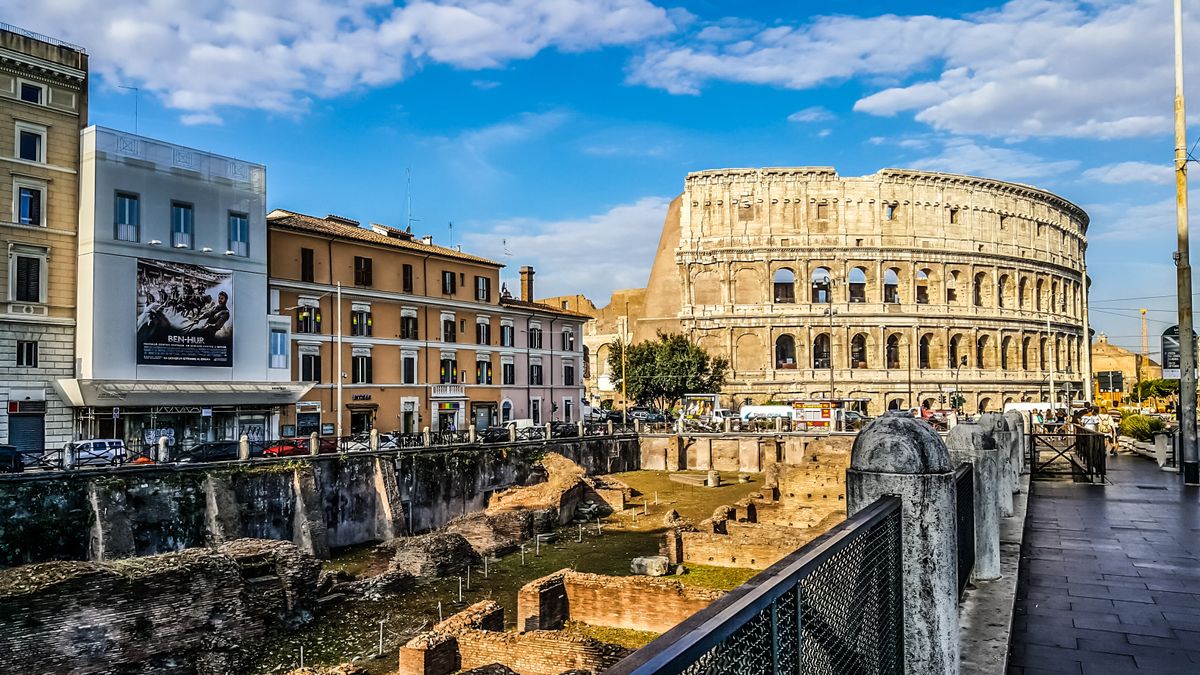
Few historical questions generate more confident wrong answers than why Rome fell. Edward Gibbon blamed Christianity and moral decline in the 18th century; 20th-century historians emphasized economic factors; modern commentators draw analogies to contemporary politics. After years of studying the historiography, I can tell you that the honest answer is considerably more complex and more interesting than any single-cause explanation. Here is what the evidence actually shows.
First, Which Fall Are We Talking About?
The question of Rome's fall contains a hidden assumption that needs to be examined: which Rome, and what counts as falling? The Western Roman Empire is conventionally dated as falling in 476 CE, when the Germanic chieftain Odoacer deposed the last Western emperor, Romulus Augustulus. But the Eastern Roman Empire (the Byzantine Empire) continued for another thousand years until Constantinople fell to the Ottomans in 1453. Rome the city continued to exist; Roman law shaped European legal systems for centuries after 476; the Catholic Church preserved and transmitted Roman culture and Latin. What fell in 476 was a specific administrative and political structure — the Western imperial government — not Roman civilization as a whole. This distinction matters because many of the Rome fall narratives are really about the end of a particular political entity, not the disappearance of a civilization.
The Economic and Fiscal Crisis
The most robustly supported contributing factor to the Western Empire's decline is economic and fiscal: the cost of defending an enormous frontier exceeded the empire's capacity to generate revenue. The third century CE saw catastrophic inflation driven by currency debasement — emperors reduced the silver content of coins to pay their armies, producing a cycle of inflation that devastated the middle class, disrupted trade, and reduced state capacity. The tax burden required to maintain the military and administration drove small farmers off their land and into dependency on large landowners — a process that simultaneously reduced the tax base and increased the power of regional elites at the expense of central authority. Archaeological evidence of declining urban populations, reduced long-distance trade, and lower agricultural output all point to genuine economic contraction in the late Western Empire.
The Military Transformation
The Roman military of the late empire looked very different from the Republican and early Imperial legions of popular imagination. By the 4th and 5th centuries, the military was heavily dependent on Germanic foederati — allied barbarian troops who fought under their own leaders and cultural codes. This was partly a practical necessity (Roman citizen recruitment had declined) and partly the result of the policy of settling barbarian groups within imperial territory in exchange for military service. The transformation produced armies that were effective fighters but whose primary loyalty was to their commanders and their own groups rather than to Rome as an abstraction. When the political and economic systems that compensated these armies broke down, the military's institutional loyalty to the empire dissolved with them.
What the Single-Cause Explanations Miss
Gibbon's moral and religious decline thesis has been thoroughly critiqued: the Eastern Empire, which was equally Christian and showed no less moral decline by any measure, lasted another thousand years. Climate change theories (a genuine cooling period did occur in the 5th-6th centuries) explain some pressures but not the political collapse. Lead poisoning theories are largely dismissed by modern historians. The honest answer is that Rome's fall was overdetermined — multiple reinforcing problems compounded each other in ways that made recovery increasingly difficult. The Western Empire's specific geography (longer, more vulnerable frontier, fewer defensible natural borders) and political fragmentation (more regional power centers, more frequent civil wars over succession) made it more vulnerable than the East to the pressures that both halves of the empire faced.
Honest Bottom Line: Rome did not fall for one reason, and the 476 CE date is a convention, not a clear historical break — the Eastern Empire continued for a millennium. The most robustly supported contributing factors: fiscal crisis driven by the unsustainable cost of frontier defense and currency debasement, economic contraction evidenced archaeologically, military transformation toward barbarian foederati whose loyalties were increasingly non-Roman, and political fragmentation that made coordinated responses to compounding crises impossible. Single-cause explanations (Christianity, moral decline, lead poisoning) fail to account for why the Eastern Empire, facing the same factors, survived so much longer.

Marcus Johnson holds a PhD in Modern History from the University of Edinburgh and has spent 11 years making historical research accessible to general audiences. He covers history, world affairs, and cultural analysis wit...
![Ancient Mesopotamia [2026]: The First Cities and Why They Matter to Us Now](/img/posts/ancient-mesopotamia-honest-2026-5efa459e.jpg)
![Ancient China [2026]: The Civilizations, Philosophies, and Inventions That Shaped the World](/img/posts/fix-ancient-china-honest-guide-2026-85682c62.jpg)
![Ancient Greek Philosophy in Daily Life [2026]: 5 Ideas That Are Actually Useful Today](/img/posts/ancient-greek-philosophy-daily-life-2026-213239fe.jpg)
![Alexander the Great [2026]: The Honest Assessment](/img/posts/fix-alexander-the-great-honest-2026-5d5361a5.jpg)