AI Hardware in 2026: Why the Chip Race Matters for Every AI User
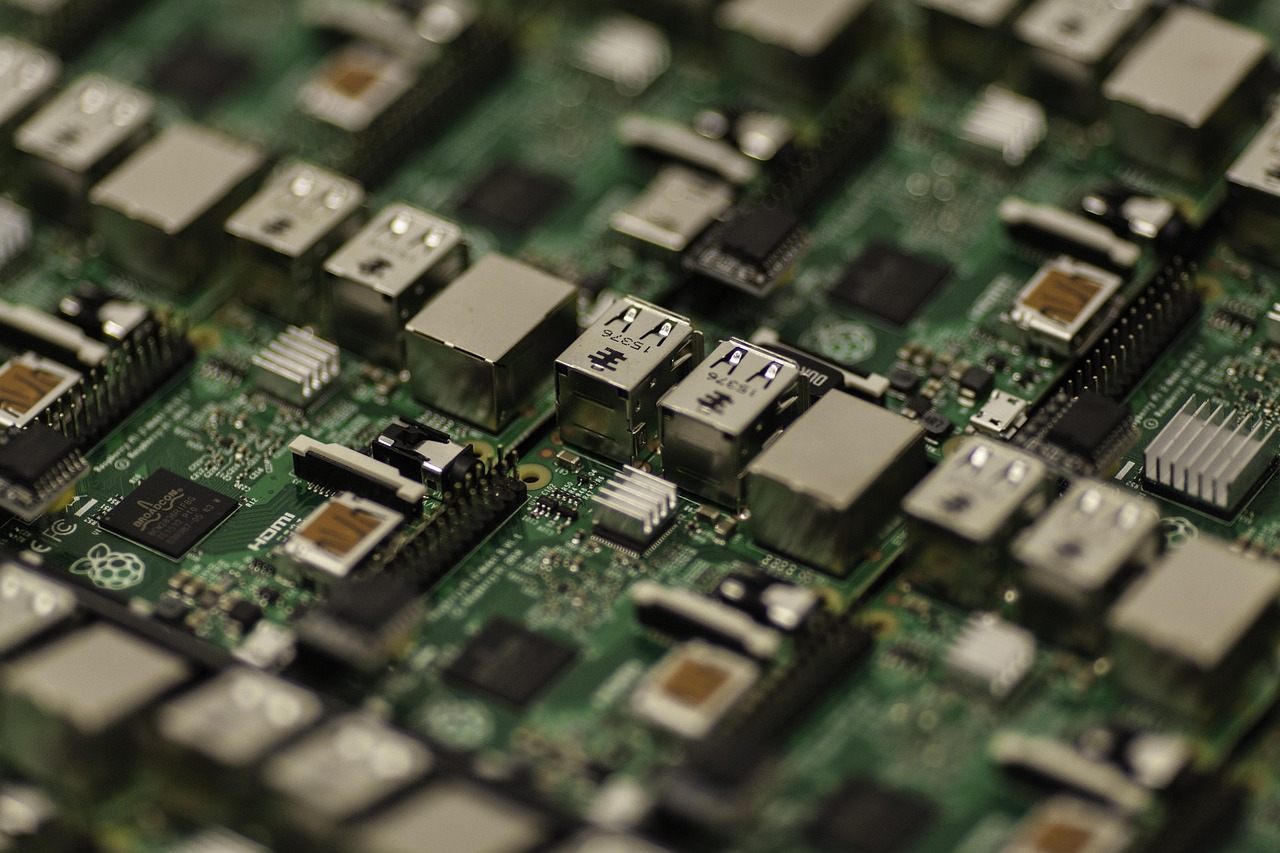
NVIDIA, AMD, Intel, and custom chips from Apple and Google — the AI hardware race is intensifying. Here is why it matters for everyday AI users.
The artificial intelligence revolution runs on specialized hardware, and the competition to build better AI chips has become one of the most consequential technology races of the decade. NVIDIA, AMD, Intel, Google, Amazon, Apple, and a wave of startups are all competing to build the hardware that will power the next generation of AI. For most users, this hardware competition seems distant from their daily experience of AI tools. It is not. Here is the honest guide to why the chip race matters and what it means for how AI products evolve.
Why AI Needs Special Hardware
Traditional computer processors — CPUs — are designed for sequential, general-purpose computation. They are excellent at running diverse software tasks with complex branching logic. AI model inference and training require a fundamentally different computational pattern: massive numbers of simple mathematical operations (primarily matrix multiplications) performed simultaneously. GPUs — originally designed for rendering graphics, which also requires parallel matrix operations — turned out to be well-suited for AI computation, which is why NVIDIA's GPU business became the foundational infrastructure of the AI boom.
The scale of this hardware demand is staggering. Training a frontier large language model requires thousands of high-end GPUs running for weeks or months. Running that model at the scale of millions of daily users requires data centers full of inference hardware. The cost and availability of this hardware directly constrains what AI products can exist, how capable they can be, and how much they cost to use.
NVIDIA's Dominance and Its Limits
NVIDIA's H100 and H200 GPUs, and the newer Blackwell architecture, have been the primary hardware powering the AI boom. NVIDIA's advantage is not just the hardware itself but the CUDA software ecosystem — decades of developer tools, libraries, and optimization that make NVIDIA GPUs dramatically easier to use for AI development than alternatives. This software moat is arguably more defensible than the hardware itself.
The honest constraint: NVIDIA GPUs are extraordinarily expensive (H100s have sold for $30,000+ per unit at peak demand) and supply-constrained. The waiting lists for major customers have driven competitors and customers alike to accelerate alternatives. This supply constraint has directly slowed the development and deployment of AI products that require frontier-scale computation.

The Challengers: Custom Silicon and the Inference Opportunity
Google's TPUs (Tensor Processing Units) have powered Google's own AI products for years and are available through Google Cloud. They are competitive with NVIDIA for specific workloads but lack NVIDIA's software ecosystem breadth. Amazon's Trainium and Inferentia chips power AWS AI services and have improved significantly. Apple's Neural Engine, built into every recent iPhone and Mac, enables on-device AI inference that does not require cloud connectivity — a genuinely different capability that has driven features like on-device Siri improvements and local image processing.
The most important emerging trend: the separation of training hardware (where NVIDIA dominates) from inference hardware (where more diverse options are viable). Training a model requires frontier hardware with massive memory bandwidth; running a trained model efficiently can be done on more diverse, cheaper hardware. This distinction is driving a wave of inference-specialized chips from startups including Groq, Cerebras, and others, which offer dramatically faster inference at lower cost for specific use cases.
What This Means for AI Users
The hardware race matters for users in three direct ways. First, capability: the models available to users are constrained by what hardware can train and run efficiently. Better hardware enables larger, more capable models. Second, cost: inference hardware efficiency directly determines the per-query cost of AI products, which determines pricing and availability of advanced features. Third, latency: faster inference hardware produces faster AI responses, which matters for user experience in real-time applications. The improvements in AI product quality over the next two years will be driven as much by hardware advances as by model architecture improvements.
Bottom Line: AI hardware is foundational infrastructure that constrains what AI products can exist and at what cost. NVIDIA dominates training hardware through a combination of GPU performance and the CUDA software ecosystem that competitors have not replicated. The inference hardware market is more competitive, with Google TPUs, Amazon chips, Apple Neural Engine, and a wave of startups offering alternatives that matter specifically for running trained models efficiently. The hardware race directly affects AI users through model capability, pricing, and response speed — improvements in all three over the next two years will be driven substantially by hardware advances alongside model improvements.